

MONACHUS
FSB-RT09
ABOUT MARTES
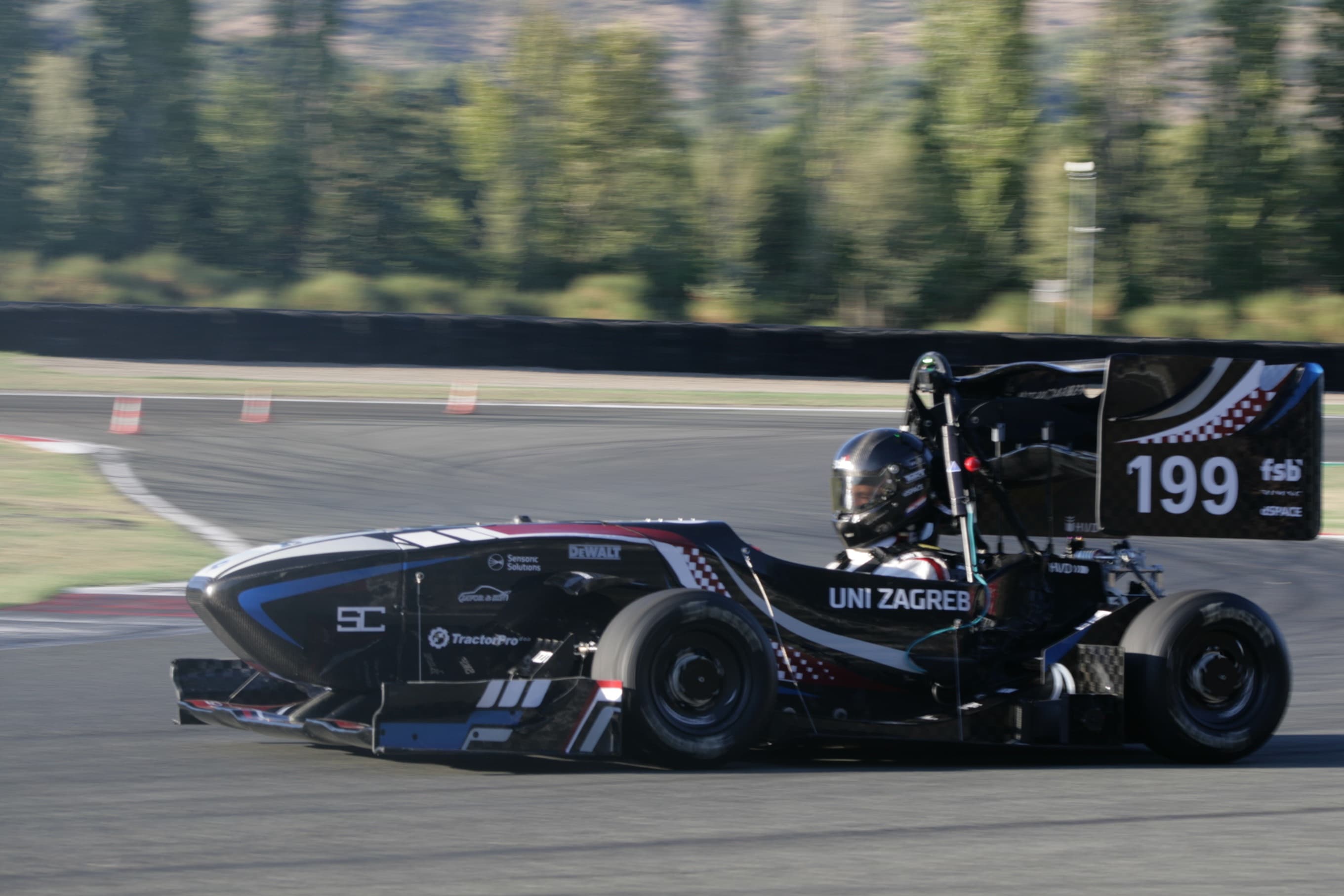
Every car tells a story, and Monachus tells one of resilience. Named after Monachus monachus, the Mediterranean monk seal, this year's build honors one of the rarest marine mammals on Earth, a species now critically endangered, with only a few hundred left along the Mediterranean and Adriatic coasts. Like the seal, Monachus is built to be agile and precise, moving with purpose and cutting through resistance rather than fighting it.
The livery carries that story forward. Deep blues wash across the chassis this year, a nod to the Adriatic waters that shaped the car's namesake. Set against the sharpened checkerboard pattern that has become the team's signature, the blue adds more than contrast, it ties Croatia's coastline directly to the car's identity. Monachus isn't only a step forward in performance; it's a car built to be felt as much as driven.
Mass: < 195kg (est.)
E-Motors: 4 x 35 kW
Battery capacity: 7.78 kWh
Torque: 4 x 346.6 Nm
Chassis: CFRP monocoque
Total downforce: 1176 N (80 km/h)
Total drag: 470 N (80 km/h)
Aero balance: 55.6% front, 44.4% rear
COMPETITIONS
2026 - FS Italy, 2nd in Cost and Manufacturing (EV Category)
2026 - FS Poland
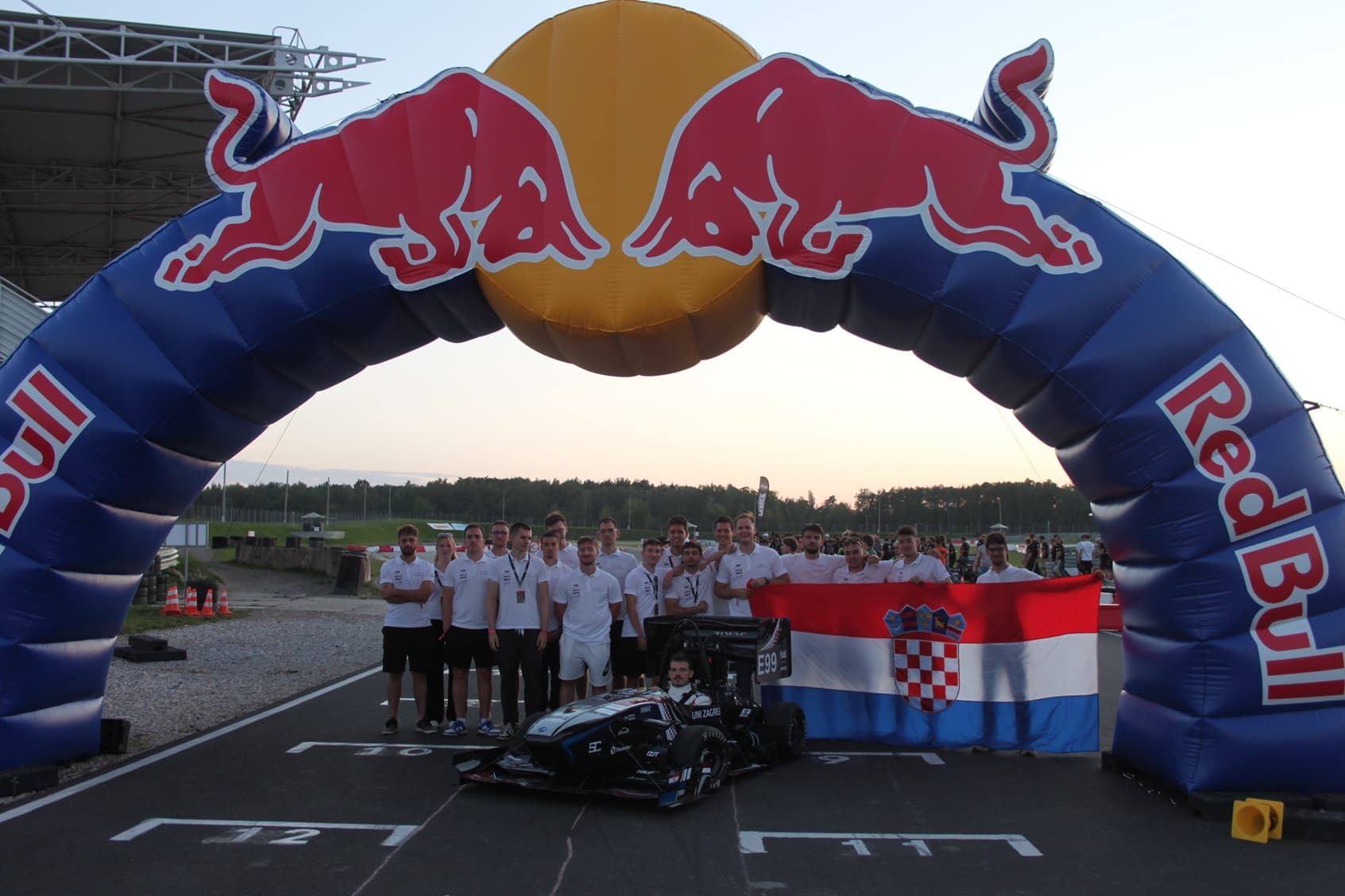
2026 - FS Austria, Red Bull Ring
AERODYNAMICS
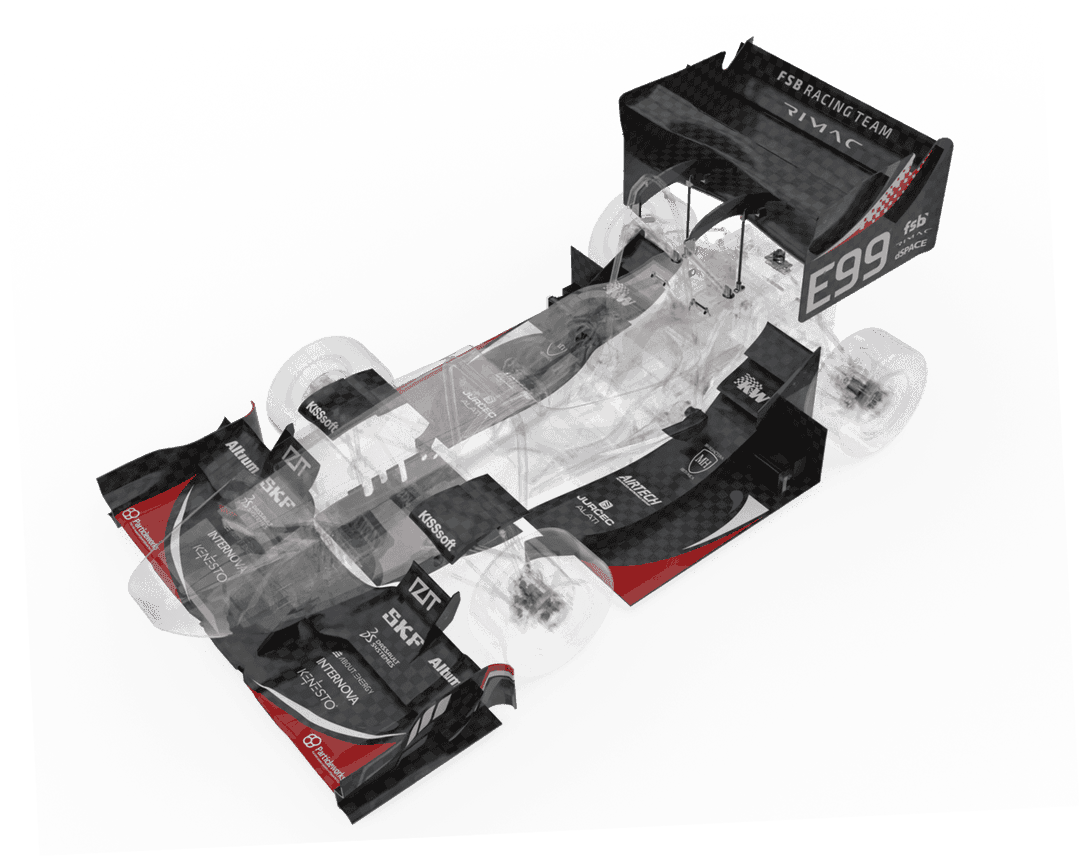
The aerodynamic package consists of multiple body attachments, mostly wings, aimed at creating downward vertical load on the tyres, thus increasing grip. Aerodynamic surfaces are developed in accordance with vehicle dynamic goals using CFD simulations which are used to analyze aerodynamic loads in different driving conditions with our focus being on cornering characteristics. This aerodynamic package was the first in team's history manufactured with the vacuum infusion method.
Aerodynamic performance at 80 kph: CLA: 4,09 | CDA: 1,54 | CL/CD: 2,66
Cornering CLA: 5,94 (max 7,12)
Race-ready aerodynamic package mass: 12,03 kg
Addition of air splitter element increased undertray downforce by 21%
Redesigned front and rear wing mounts to minimize losses in crosswind and cornering conditions
Robust front wing design allowed for consistent performance at higher pitch angles
Created 5d performance maps with surrogate model
Optimized layups which allowed for targeted stiffness increase while reducing mass
COOLING
The cooling system consists of a single loop with two radiators and two pumps. The VCU controls the pumps and fans to ensure optimal thermal performance.
● DC fans utilized for additional radiator mass flow
● Weight of the cooling package: 7 kg
● Nominal pump power: 40 W
● Cooling system water flow: 12 L/min
● Simulated radiator mass flow: 0.2 kg/s
SUSPENSION & STEERING
The primary goals during the suspension development were sufficient stiffness and adjustability options to achieve high mechanical performance. Both front and rear suspension are uncontrolled by competition, which allows for separate adjustments of all six parameters. Steering ratio is designed based on the driver's inputs. Extensive use of composite materials in the suspension as well as thin-wall shafts reduced the weight of the entire system.
● Sprung mass (drivetrain, suspension, and electric motors) 47.4 kg
● Double wishbone pull-rod/push-rod suspension
● Steering wheel: a CFRP shell designed with 6 built-in buttons and 3 rotary switches
CHASSIS
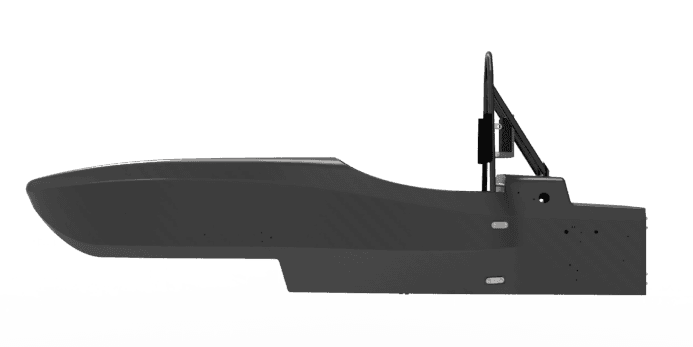
The monocoque is made of a sandwich structure using four different types of carbon-fiber prepregs. Two different cores of aluminum honeycomb and PMI foam. It is manufactured as one single piece. The main focus is weight reduction with ultimate driver ergonomics and compact packaging.
● Weight of the monocoque: 24 kg
● Torsional stiffness (calculated): 4700 Nm/deg
● Weight of the seat: 0.7 kg
● Weight of the pedal box: ~1.8 kg
VEHICLE DYNAMICS
Tires were selected from available Tire Testing Consortium data (FSAE regulations). To achieve a predefined, Afterward, suspension kinematics, and yaw balance were analyzed and optimized to achieve a Vehicle Dynamics performance within body motion limitations and driver feedback. This was done in collaboration with other subsystems to optimize the performance of each subsystem and to give final input to their design.
● Utilizing optimal tire performance - Tire Testing Consortium (TTC)
● Mathematical Vehicle Model used for yaw balance simulation and lap time investigation ; pimary goal was to adjust the Vehicle to maintain similar characteristics.
● More software used for load determination
● Chassis torsional stiffness as a target for the Chassis subsystem
● Aero balance input for the Aerodynamics subsystem
● Gear ratio as input for drivetrain
CONTROL
Self-developed active driver control algorithms. Vehicle torque vectoring and traction control that improve speed and overall traction. Sensors, including wheel speed, accelerometers, temperature, position and an optic sensor are connected to the car’s VCU. Custom in-wheel dash for power modes and algorithm settings. Data logging and telemetry unit monitors the data while on track for further analysis.
- dSpace VCU
- 6 channel High-speed CAN Bus
- Traction Control
- Torque Vectoring
- Active power derating
- Custom in-wheel Dash
- Self-developed LTE telemetry
- Wifi connectivity
POWERTRAIN
...
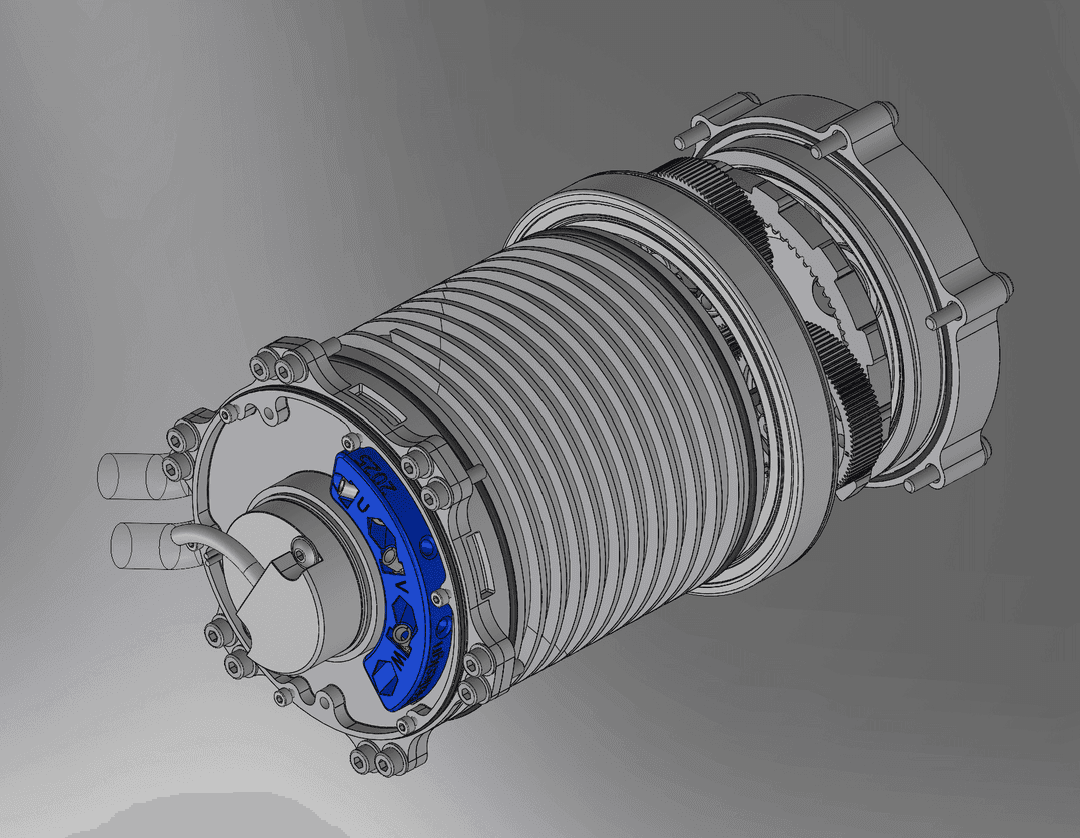
DRIVERTRAIN & E-MOTORS
This year's car features an in-wheel motor concept, in which the gearbox is placed inside the rear upright. The planetary gear train allows the gearbox to be placed inside a small assembly with high torque by using coaxial input and output shafts. The planetary setup acts as both a carrier and an output shaft to minimize the inertia of the whole assembly.
● Compound planetary gearbox
● Multiplate for engaging lubrication
● Final drive ratio: 8.82
● Case hardened and shot nitrided gears
The car uses four Fisher permanent magnet motors with custom cooling jackets. In wheel motors are mounted to uprights, with each wheel being driven independently.
● Torque: 31.6 Nm
● Max speed: 20 000 rpm
● Peak power: 35 kW
● Dry mass: 3.7 kg